 |
 |
|

 |
 |
 |
 |
 |
 |
 |
 |
 |
 |
 |
 |
 |
 |
 |
 |
 |
 |
 |
 |
 |
 |
 |
 |
 |
 |
 |
 |
 |
 |
 |
 |
 |
 |
 |
 |
 |
 |
 |
 |
 |
 |
 |
 |
 |
 |
 |
 |
 |
 |
 |
 |
 |
 |
 |
 |
 |








|
Consuegra's
Rose of Saffron Festival Story by Richard Frisbie
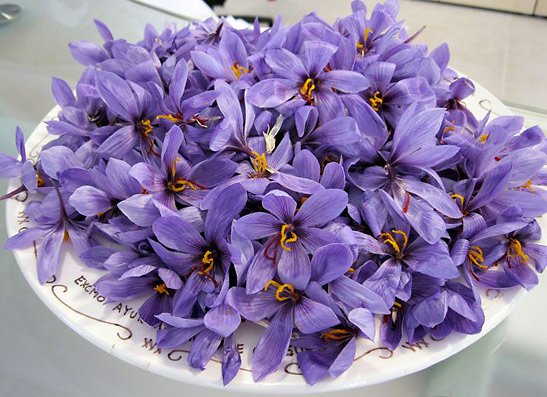
Saffron is commercially produced in many places in the world, but most chefs prefer the superior quality saffron grown in central Spain. There, it takes more than 100,000 flowers to produce a pound of saffron. Since only a few strands, or about 1/8 tsp are used for an average recipe, saffron is available retail in fractions of an ounce, not pounds.
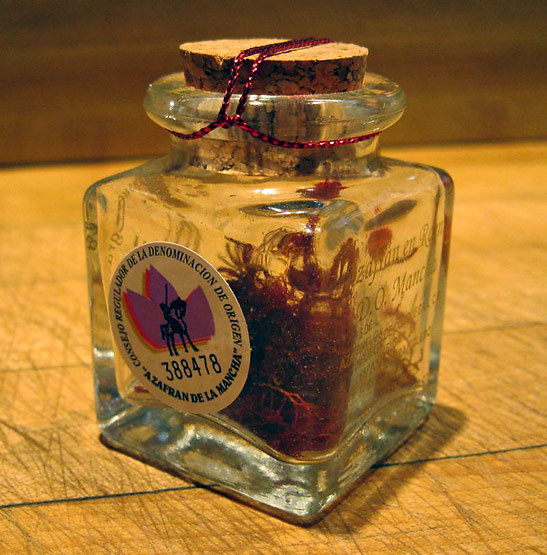
The red, highly aromatic saffron of "Castilla y la Mancha" is the only one in the world with its own appellation, or DO, (Dominacione de Origen) assuring it is the true Manchegan saffron. On a recent tour of the growing fields in the town of Consuegra, I paid 3.5 euros ($5) for 1gram directly from the grower, Jesus Moreno. (1 g equals .035 oz) It was beautifully packaged in a fancy, wax-sealed bottle, perfect for gifting.
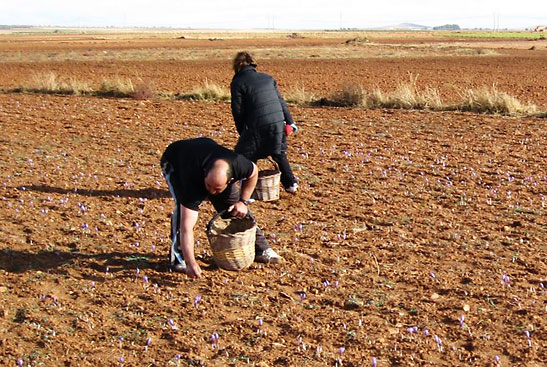
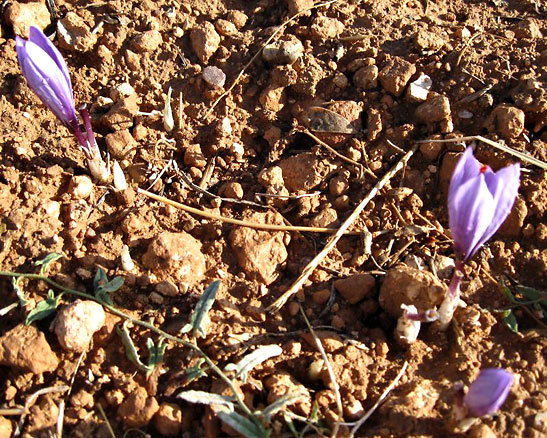
The best time to harvest saffron is in mid-morning on a sunny day, when the flowers just open and are still fresh. The morning I was there it was overcast, with patches of rain alternating with brief and elusive patches of sunshine. Just as I got to the fields it cleared and the sun came blazing out. The crocus flowers, tightly closed in purple buds, were slowly opening as Jesus and his wife Jaqu, bent at the waist, inched down the plant rows harvesting saffron. They plucked the whole flower, leaving barren fields in their wake as they slowly filled their baskets. Each day an established field will send up new flowers where yesterdays were picked, and the process begins again. The whole back breaking harvest is completed within 2-3 weeks. Then the stigmas are separated from the flower and dried before packaging for retail and wholesale distribution. When the saffron finally reaches your kitchen it needs to be steeped in a bit of warm cooking liquid for 20 minutes or so before being incorporated, liquid and all, into your recipe. The longer it cooks the more flavor is extracted, so it is added early in the cooking process.
Saffron also adds color, similar to turmeric, which is sometimes recommended as an inexpensive alternative. Don't do it! The intense flavor of saffron, which some describe as slightly bitter, some sweet as honey, and some as redolent of the sea, cannot be duplicated by tumeric. A recipe without saffron lacks the one ingredient that pulls all the other flavors together. Use no substitute.
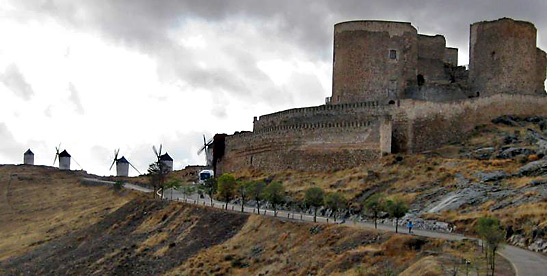
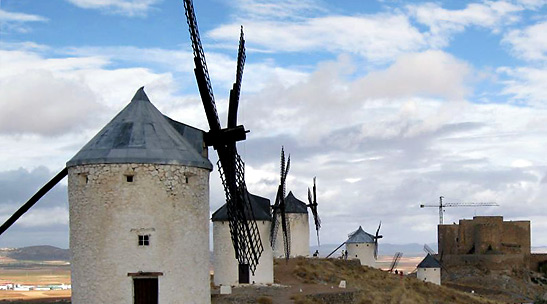
The Town of Consuegra is also famous for its windmills. Seven of them ride the crest of the ridge that rises above the town, surrounding the medieval castle that was once the stronghold of the Knights of San Juan. Each of the mills is named, with one called Sancho, after Don Quixote's sidekick. These are the best preserved windmills of Spain, dating back to the time of Cervante's famous novel, and thus find themselves on the modern Ruta de Quixote created by Spain's Paradores chain of Hotels. It was while following that route that I found myself in Consuegra. Consuegra is an agricultural community, with a centuries-long history of growing wheat. That's why there are so many windmills. They were used to grind the grain. Today the fully operational mills are only used ceremoniously during the harvest festival known as "Festival de la Rosa del Azafrán" or Rose of Saffron.
The windmills are the original "green" machines. The ancient wooden cogs and wheels are turned by the wind moving the exterior sails. They, in turn, rotate the millstones that grind the grain, which is manually carried up the winding staircase on the back of the miller. He pours it into the top of the mill to work its way down, ground, as flour. It's a centuries old design that still works today. After the grain is ground into flour it is sold in small bags to commemorate the Rose of Saffron Festival.
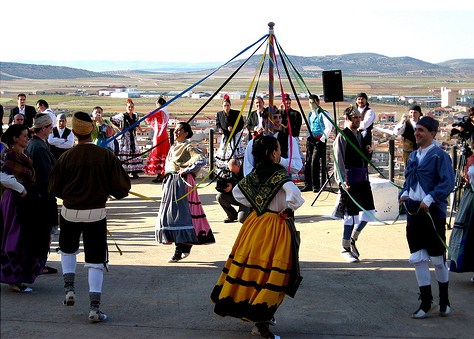
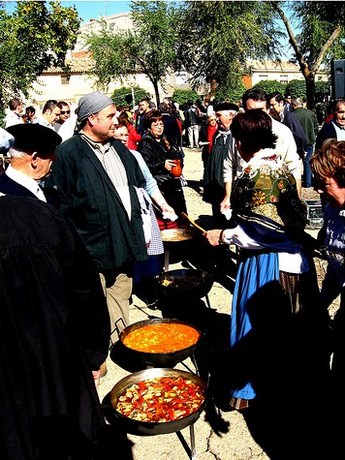
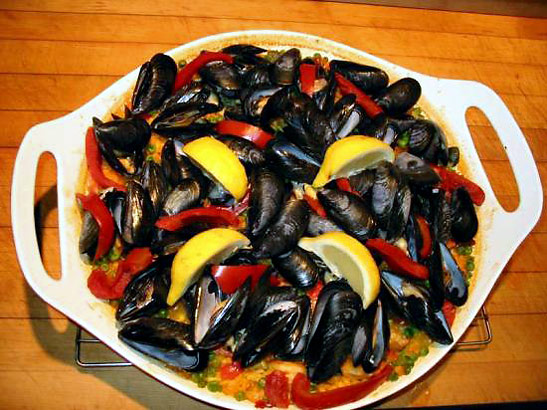
Traditionally, when the people of Consuegra finished the harvests, the festival began. In modern times that translates to the last weekend of October. It is a quaint, folkloric festival where the connection to Don Quiote is strong. The windmill called "Sancho" is used to grind the wheat, and a local beauty is crowned "Dulcinea", the name of Quixote's girlfriend. There is a contest in the village square where the fastest hands compete to remove the saffron threads from the flowers, and everyone participates wearing the traditional clothes of their village. There is also a procession of the masked "Gigantes y Cabezudos" ("giants and big-heads"), but the highlight of the festival is the culinary competition. This is when the townsfolk prepare their best recipes using saffron. The whole community turns out to taste them. It was fun to be there for the food and the festivities, but it was most important to be in the fields watching the harvesting process, and being able to purchase some certified Manchegan saffron to create my own gastronomic feast when I got home - paella!
The making of Paella - http://food.gather.com/viewArticle.action?articleId=281474977152183 I NEED SPAIN: http://www.tourspain.es The official Paradores Don Quixote route: http://tinyurl.com/rutadequixote Air Europa – http://www.aireuropa.com Related Articles: |

 Let Richard know what you think about his traveling adventure.
|

|
| ||||
|
| ||||
|
| ||||












This site is designed and maintained by WYNK Marketing. Send all technical issues to: support@wynkmarketing.com

|