Travel Pilgrimages
Mozart in Salzburg & 'Kit' Carson in Taos
by Ringo Boitano
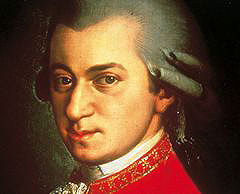
An official portrait of the genius.
Courtesy: Salzburg Tourism
ohann Chrysostom Wolfgang Amadeus Mozart (1756 - 1791) could read and
compose music, plus play the violin and keyboard, when he was five years
old. Born into a musical family in Salzburg, Austria (then the Holy
Roman Empire), he had a unique ability for imitating music, which first
became evident when he recited a musical piece by simply observing his
father conducting a lesson to his older sister. This led to a childhood
on the road, where the young prodigy performed before many of the royal
courts of Europe. At 17, no longer a child prodigy, he returned to Salzburg
and accepted a post as a court musician, but was frustrated with the
salary and stifling opportunities. His early travels and uncanny memory, though,
had provided him with a plethora of musical styles and experiences, from which
he used to create his own compositional language. He eventually settled in
Vienna where he achieved fame, and is now considered one of the most influential
and prolific composers of the Classical era.
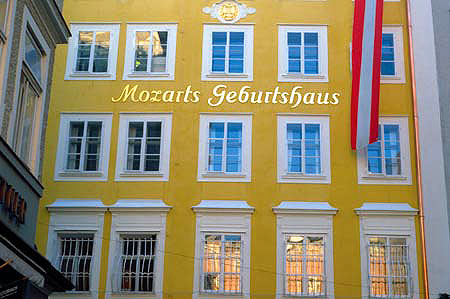
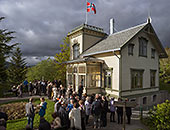
The Birthplace of Mozart. Courtesy:
Salzburg Tourism
Though Mozart was never happy with his career in Salzburg,
the city today is a Mecca for all things Amadeus. An essential stop
is a visit to Mozart's Geburtshaus (birthplace). This is the house where
Mozart's parents lived for 26 years and young Mozart was educated. Now
a three-story museum, it is filled with original instruments ---- Mozart's
childhood violin, concert violin, clavichord and pianoforte --- portraits,
family letters, and furniture and objects of daily use, including Mozart's
very cradle. I strongly recommend a private tour, where guides are walking
encyclopedias about his life. Why were Mozart's famous eyes so bulging?
He didn't eat his vegetables!
Another Mozart must is a dinner concert at the famous
Stiftskeller St. Peter, considered the "oldest restaurant in Europe."
The concert is performed by candlelight between food courses, prepared
with traditional recipes from Mozart's era. Period-costumed musicians,
including two opera singers, perform arias from "Don Giovanni", "Le
Nozzi di Figaro" and "The Magic Flute." Dining under magnificent chandeliers
and surrounded by 18th century décor, not to mention the stirring music,
is like being transported back to the magical times of Mozart.
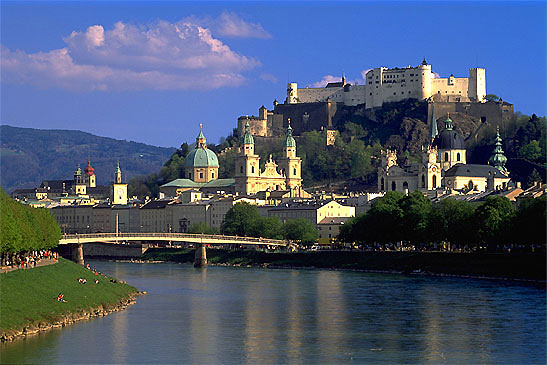
The enchanting beauty of Salzburg.
Courtesy: Salzburg Tourism
The setting in Salzburg --- itself an enchanting
fairytale of a city --- only enhances the experience. The city's wealth
was built on the mining of salt ('salt' translates to 'salz' in German,
hence the city's name). The west bank of the Salsas River borders the
Alborg Historic Centre (known to locals as the Altadt), and is where most
of the attractions are located. The fortress Festung Hohensalzburg towers
over narrow cobblestone streets, lined with stunning baroque architecture.
Smartly dressed locals sit in elegant coffee houses, noshing on delicate
pastries and Mozartkugln (Mozart chocolate balls) and sipping frothy cups
of coffee. I could have spent a week there.
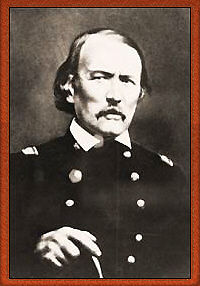
The legend: Christopher Houston "Kit" Carson.
Courtesy: Kit Carson Home and Museum
Christopher Houston "Kit" Carson (1809 - 1868) spoke
ten languages, including numerous American-Indian dialects. Yet he was
virtually illiterate, barely able to write his own name. Born in rural
Kentucky, he ran away from home as a teenager and joined a hunting expedition.
This began a life of adventure, which led to his becoming one of the
most legendry figures in western history. American frontiersman, solder,
trapper and mountain man, Carson drew national attention when he became
a guide for John C. Fremont on three scientific and mapping expeditions
through Oregon and California. The American public had a hearty appetite
for the 'untamed land of the west,' and Carson became as famous as Fremont's
published reports.
Carson eventually settled near Taos to farm and to do
occasional scouting. He met Josefa Jaramillo, the daughter of a prominent
Taoseno family. Despite their age difference --- he was thirty-three years
old and she was only fourteen --- they married. As a wedding present for his
new bride, Carson purchased a three-room adobe structure. They were married
for 25-years, and raised seven children. During that period the house became
a place for entertaining Taoseno "politicos" and prominent members of society.
Carson's nationally known reputation also brought generals and congressmen,
not to mention craggy mountain men and trappers. Kit and Josefa lived in the
house until their deaths, exactly one-month apart.
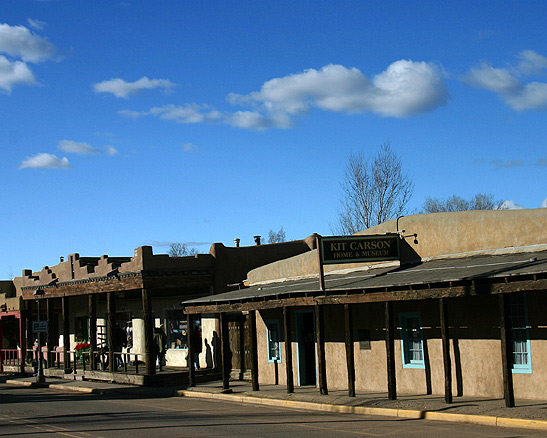
The Kit Carson Home and Museum is located one block
from the Taos Plaza. Photo Credit: Deb Roskamp.
Today visitors can learn about the history of the legendary
western icon and life in Taos, due to the preservation of the home. Located
one block from the Taos Plaza, the Kit Carson Home and Museum is a series of
buildings which includes the original three room home, plus two buildings that
contain a retail shop and additional exhibition space. The simplicity of the
architecture and the sparse displays --- sheepskin bedding, buffalo hide,
basic kitchen utensils, and outdoor kiva fireplace --- not only educates us
about Carson, but show what life was like for a family living in that era.
The Kit Carson Home and Museum is a mandatory stop when visiting Taos.
I love Ringo's piece on historic hotels. I once stayed
at the Laurentian in Montreal - is it still around, is it historic?
And then there was the Heups in Bismark.
It is interesting that two of your entries are in CANADA.
Brent, Seattle, WA
It's no mystery that you are great at what you do.
Sandee, Seattle, WA
* * * *
The Mystery on the Oasis pics are very funny!
Ramon, Kansas City, MO
* * * *
Ha ha ha ha ha...love your "schtick" Ringo!!
Dolly, Las Vegas, NV
Hello the travelling Boitano's hope you enjoy. Best
wishes.
My Irish roots understand terrible beauty. So do my
human roots. The concept has such a ring of truth to it, doesn't it?
Great article, Ringo. I hope to get to Ireland eventually, and thanks
for blazing the trail!
Sandeee Bleu, Seattle, WA
* * * *
No wonder I've been hearing all these wonderful stories
about Ireland. I used to think that it was just for Irish Americans
seeking their ancestral roots but your article seems to call out to
the non-Irish like me. Fascinating and intriguing.
Peter Paul, Pasadena, CA
Thanks for this great post wow... it's very wonderful.
Key Logger, New York
* * * *
Lets not forget that the Marriot Harbor Beach is within
walking distance to the world famous Elbo Room - Fort Lauderdale's oldest
bar.
Jeff, Fort Lauderdale, FL
* * * *
Jeff–
Thanks for taking the time
for the message and reminder. Indeed, I had a quick drink at the Elbo
Room. My trip to Ft. Lauderdale would not have been complete without
a visit to this historic institution.I have been reading about it for
years, and was not disappointed. It felt like a real local's hangout.
- Ringo
Ringo,
I
thoroughly enjoyed your article about Dick and Liz. I remember seeing
that article back in the heyday of Life Magazine.
To remember the "behind-the-scenes" stories
like that makes you genuine fan of the 60's. The famous couple's turbulent
relationship was just a precursor of today's headline-grabbing media
stars like Britney Spears and her colleagues. Life was simpler then.
The paparazzis still had some sense of decency. You "coulda"
been a good paparazzi. I say "coulda" because you kept this
to yourself all these many years.
Looking forward to other media trivia you can remember.
Peter Paul, South Pasadena, CA
Hey, Ringo –
Enjoyed your article on Antarctica --- cool photos,
too. One thing, you mentioned that Ushuaia in Argentina is considered
the most southern city in the world. I read that Chile lays claim to
that distinction, with Punta Arenas, the southernmost city in the world.
Mick, Greenbay, WI
* * * *
Mick –
Now that football season is
over --- I’ve often wondered what you Packer fans did in the off
season ---- it’s great that you took the time to visit TravelingBoy.
Great question, unlike my older brother, I adore all lamb products,
and Patagonian Lamb --- cooked in a restricted area at the restaurant
in an opened wood-fueled fire pit --- is amazing. The chef actually
uses an ax to carve it. Frankly, I found it superior to Norwegian fjord
lamb, Irish Burren lamb and even those much esteemed creatures down
in New Zealand. The crab in Ushuaia is the other thing to eat. Wait
a sec, you asked about Punta Arenas vs. Ushuaia as the furthermost city
in the world. Well, they both have little disclaimers re populations
--- you know, what’s a city, which one is a town, ect – so
better let Chile and Argentina brass it out. They seem to be able to
argue about any subject.
- Ringo
Three Musical Pilgrimages: Mozart, Grieg and Hendrix
Johann Chrysostom Wolfgang Amadeus Mozart (1756 - 1791)
could read and compose music, plus play the violin and piano, when he was
five years old. Born into a musical family in Salzburg, Austria (then the
Holy Roman Empire), he had a unique ability for imitating music, which first
became evident when he recited a musical piece by simply observing his father
conducting a lesson to his older sister. This led to a childhood on the
road, where the young prodigy performed before many of the royal courts
of Europe.
Treasures of Ireland: The Irish Goodbye (Dispatch
#20)
The Palladian Traveler brings to a close his 20-part
series on the Emerald Isle from an upscale restaurant in downtown Dublin
where he files his final dispatch and then quietly slips away.
Two "MUST SEE" Truly Spectacular Places
in Europe. Here's Why.
The Han Grotto and Culzean Castle. As the name
of my Traveling Boy feature is "Travel With a Difference," it's
important to me to always bring you offbeat and unusual tourist places around
the world you may not know about. These two fit that category to a T, and
they're absolutely worth a visit. One's in Scotland and one's in Belgium.
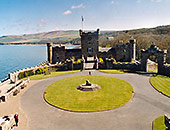
Culzean (pronounced CULLANE) Castle is located near Maybole, Carrick, on
the Ayrshire coast of Scotland.
Highway 49 Revisited: Exploring California's
Gold Country
In the 1840s, the population of California was only
14,000, but by 1850 more than 100,000 settlers and adventurers had arrived
from all over the world – and they came for one reason: gold. James
Marshall had discovered the first gold nugget at Sutter’s Mill in El
Dorado County, creating the largest gold rush in history.
Lake Charles’ Family-Size Low-Key Mardi Gras
The Southwest Louisiana Mardi Gras in Lake Charles,
the second largest in Louisiana, does not need parents there to avert their
children’s eyes. This is family entertainment and children are very
much part of it. The main office of the Lake Charles CVB has costumes from
last year’s Mardi Gras but it also has figures to fascinate little
ones from country boys fishing for their dinner to alligators who have already
fed and are rubbing their stomachs.
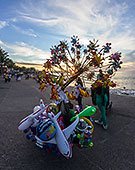
Puerto Vallarta: Magic and Mayhem on the Malecon
So I heard that you could spend from dawn to dusk on
the Malecon in Puerto Vallarta, Mexico and never get bored and I thought,
"Okay, I'm up for that challenge." Well, maybe not the dawn part
– I'm not a morning person – so I had no problem leaving those
early hours to the joggers and those seeking an early start to catch their
red snapper for dinner.
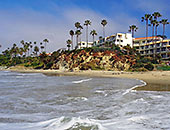
Relaxing at The Inn at Laguna Beach
There is nothing like sleeping in an ocean-front room
and awakening to the sounds of waves crashing against the sand. It is
one of the finer things in life. And it is exactly what I experienced
recently on a memorable getaway to The Inn at Laguna Beach. The adventure
began when a friend I pulled off the 5 Freeway in Orange County and took
SR 133 south nine miles through winding lush hills and wilderness areas
to the ocean.
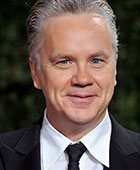
Tim Robbins On His Road To Stardom
Award-winning Tim Robbins began his career on episodic
television. Robbins' film work, however, is what catapulted him into becoming
a major movie star including "Bull Durham" and "Mystic
River" for which he won multiple awards. Equally at home behind the
camera, he directed the riveting "Dead Man Walking." He is Founder
and Artistic Director of The Actors' Gang, which he formed thirty-five
years ago and has directed multiple provocative productions.
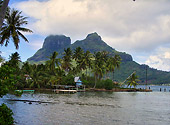
Tahiti and Her Islands
Just their names (pronounce each vowel!) conjure up romantic
images: Tahiti Nui, Moorea, Bora Bora, Huahine, Ra'iatea, Taha'a. Her
people are gentle; the air, tiare-perfumed. Warm lagoons, majestic peaks,
tropical fruits from the land and bounty from the sea all tantalize the
senses. Paradise! As near as can be found on planet earth. And, in my
experience, the finest way to explore her is on a ship designed for that
single purpose.
Leviticus 20:13 Sent by Tom of Pasadena,
CA
It all makes sense now. Gay marriage and marijuana
was legalized in the last election. Leviticus 20:13 states
"If a man lays with another man, he should be stoned..." We've
been interpreting it wrong all these years!



































































 ohann Chrysostom Wolfgang Amadeus Mozart (1756 - 1791) could read and
compose music, plus play the violin and keyboard, when he was five years
old. Born into a musical family in Salzburg, Austria (then the Holy
Roman Empire), he had a unique ability for imitating music, which first
became evident when he recited a musical piece by simply observing his
father conducting a lesson to his older sister. This led to a childhood
on the road, where the young prodigy performed before many of the royal
courts of Europe. At 17, no longer a child prodigy, he returned to Salzburg
and accepted a post as a court musician, but was frustrated with the
salary and stifling opportunities. His early travels and uncanny memory, though,
had provided him with a plethora of musical styles and experiences, from which
he used to create his own compositional language. He eventually settled in
Vienna where he achieved fame, and is now considered one of the most influential
and prolific composers of the Classical era.
ohann Chrysostom Wolfgang Amadeus Mozart (1756 - 1791) could read and
compose music, plus play the violin and keyboard, when he was five years
old. Born into a musical family in Salzburg, Austria (then the Holy
Roman Empire), he had a unique ability for imitating music, which first
became evident when he recited a musical piece by simply observing his
father conducting a lesson to his older sister. This led to a childhood
on the road, where the young prodigy performed before many of the royal
courts of Europe. At 17, no longer a child prodigy, he returned to Salzburg
and accepted a post as a court musician, but was frustrated with the
salary and stifling opportunities. His early travels and uncanny memory, though,
had provided him with a plethora of musical styles and experiences, from which
he used to create his own compositional language. He eventually settled in
Vienna where he achieved fame, and is now considered one of the most influential
and prolific composers of the Classical era.