Above Innsbruck: Climbing Karwendel by Frank Mazer Breathtaking. Mind-boggling. I am reading
about Alex Honnold's free climb of El Capitan in Yosemite but
my mind cannot gain a firm foothold on what Alex does and how
he ticks. However, reading the story of his El Cap climb rekindled
memories of my first experience dipping my toes into the dimensions
of what he does. Welcome to a story set among the magnificent
beauty and outdoor spirited, playful people of the Tirol, Austria.
I first saw images of Innsbruck on television from the 1976 Winter
Olympic Games. Thus, was planted the seed of passion.
Cheshire Cat Inn Delivers a Homey Retreat
in Santa Barbara by Mary McGrath One thing that I love about traveling is
a chance to meet new people from places far and near. This seems
to happen more frequently when we stay at a B&B designed to
encourage conviviality and conversation.
Asia's Must See Destination Is Palawan by Carmela Kim Alvarez For someone who loves to take a trip to different
places, I can attest that traveling gives an incomparable feeling
of satisfaction. The excitement of exploring a different place
is simply unparalleled. Sometimes, though, going through the usual
turns in our travels can be a bit of a burnout. There is no sense
of excitement anymore when we get what we expected to see and
go through the customary course of the trip.
37 Above 60, Part III by Adam Sholder I awoke the next morning, Wednesday, August
2nd, to find the campground socked in with fog. No matter, I thought,
as I had quite a day planned. I headed out to the office that
would arrange to take me about 130 kilometers further north, to
the native fishing village of Tuktoyaktuk, or “Tuk,”
situated right on the shores of the Arctic Ocean. I arrived at
8:30 and was told that the weather was worse in Tuk, and no planes
were flying out. The Inuit woman told me to check back in an hour.
37 Above 60, Part II by Adam Sholder It was 4:00, and far too late to begin an
eight-hour journey into the unknown. But there I was anyway, 30
miles out of Dawson, and sitting parked in front of the sign indicating
the beginning of the 450 mile-long gravel road known as The Dempster
Highway. Completed in 1979 after 20 years of construction, the
Dempster is named after Sergeant Jack Dempster of the North West
Mounted Police.
37 Above 60, Part I: You’re Going Where? by Adam Sholder When I told people about my plans for a summer
camping trip a few years back, the response was almost invariably,
"Why?" It wasn’t an unfair question to ask, as
my camping trip was a solo journey that took me deep into the
Arctic. Beginning in Canada's Yukon Territory, or "Above
60" as it’s known to the locals (the Territory begins
as 60 degrees latitude), I traveled about 800 miles further north
on the globe, to the very shores of the Arctic Ocean.
Hilton Garden Inn Carlsbad Beach Offers
Affordable Travel Packages by Mary McGrath I've traveled to many Southern California
beach cities over the past few years. It's always a pleasure to
discover another gem adjacent to the Pacific. I found another
one in Carlsbad this past weekend.
Far from the Maddening Crowds: Boutique
Hotels in San Diego by Mary McGrath It's easy to go to the same old hotels over
and over again. It's predictable, it's familiar, but is it memorable?
What if you got outside your comfort zone? What if you took a
chance and tried something new? That's what I did when I went
to San Diego this past weekend. I explored some of the smaller
boutique properties and I came away with many memorable adventures.
SpringHill Suites Makes a Splash in Oceanside by Mary McGrath SpringHill Suites by Marriott just opened
in February, and I've got to tell you, this is a real bargain
for being by the ocean. This stylish surf inspired retreat offers
a coastal casual vibe. The rooms are finally appointed with a
beachy decor, and modern amenities that discerning travelers expect.
Step outside and you have panoramic views of the Pacific and a
long lazy pier that welcomes your attention.
A Northwest Coast Thanksgiving: Looping
the Olympic Peninsula by Sarah Wyatt It's almost Thanksgiving – time to admit
that not everyone wants to spend three hours in bumper-to-bumper
traffic to Grandmother's house for yet another meal of cold turkey
and canned cranberry sauce. Veteran road trippers see a different
opportunity: four days off to explore some spectacular byway that
offers great views and outstanding cuisine.
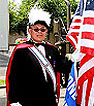
Tank Pull Fundraiser for the Wounded Warriors
Project by Carlos Roco Have you ever seen an 80,000 lb. tank on
a flat bed truck being pulled by a volunteer team? If you happen
to be into the area of NYC, you should drop by in Clifton, NJ
(15 miles west of Manhattan) every 4rth Sunday of June. For the
5th straight year, the Knights of Columbus Council 11671 St. Philip
The Apostle hosted a Tank Pull Challenge fundraiser for the benefit
of the Wounded Warriors Project.
DoubleTree Hilton Westside: A Perfect Place
for a Culver City Staycation by Mary McGrath It's vacation time, or in our case staycation
time, since lately, we've been enjoying short jaunts within a
few hours from Los Angeles. This time, we decided to explore Culver
City by vacationing five minutes away from home. When I heard
that they had recently renovated the DoubleTree Hilton Westside,
on the edge of Culver City and Westchester, I decided it was time
to take the plunge and investigate this hotel.
The Mermaid Parade by Michael Schlueter The MERMAID PARADE is the largest art parade
in the nation. A celebration of ancient mythology and honky-tonk
rituals of the seaside, it showcases over 1,500 creative individuals
from all over New York City’s five boroughs and beyond, opening
the summer with incredible art, entrepreneurial spirit and community
pride.
Hiking Stryn: The Norwegian Fjord Country by Frank Mazer "Glaciers to left of us; glaciers to
the right of us," This calls to us like thunder while chasms
of several thousand feet separate us from them, but not from our
blunder. Here we are. Our goal achieved, we stand next to the
stone hut we could see from far below. We stand amidst a scattering
of rocks. We stand where there are no streams and no pools of
water and no faucet to be found. We, the experienced hikers, stand
humbled, and we stand thirsty as we stare at our empty water bottles...
A Jogging Tour of Berlin by Frank Mazer Jogging between rows of flowers, the blue
- white palace behind me, I must remind myself to focus on the
task at hand rather than the beauty of the palace gardens. Small
groups of tourists are present here and there and a jogger must
be aware of circumventing them. There are many paths to choose
in these palace gardens in Charlottenburg Palace, Berlin.
The Queen Mary Still Reigns in Long Beach by Mary McGrath Since docking at Long Beach Harbor in 1967,
the Queen Mary's been pretty much idle, but there's still a lot
of activity surrounding this famous ocean liner, making a visit
well-worth your time.
Oceanside by Mary McGrath Looking for a charming seaside getaway not
too far from Los Angeles? Look no more. Oceanside is one of many
charming coastal communities of Southern California. About 1.5
hours south of Los Angeles, it's hard to believe that this quaint
city is currently celebrating 125 years. It has been a bit under
the radar compared to some of its neighboring communities, but
that's changing.
800 Days in Panama, Part II Eric Rosenfield I have officially moved into my new house.
And so now I'm living about a 35-40 minutes hike up from the road
down below/my old house, which means that... things are super
chill. Up where my new house is, no one really bothers me, I have
very few (and very quiet) neighbors, and there's some beautiful
views and tons of great nature, including lots of birds!
800 Days in Panama, Part I Eric Rosenfield Bari koin dere, my readers, as we
say in my community, speaking the indigenous language of Ngäbere.
It means "very good afternoon." And a very good afternoon
it is. Fortunately I've been lucky enough to have some time off
recently, since funding for my next aqueduct project has yet to
be filled.
Celebrating California's Central Coast:
Cambria and Paso Robles by Mary McGrath Itchy to get out of town, it was time to
plan another excursion. I'd heard some great things about Paso
Robles, and thought we'd partner with a stop in Cambria to round
out the adventure. It was a great strategy. Paso Robles is a mere
40 minutes from Cambria, requiring an easy drive over pristine
rolling terrain...
Destination Del Mar: Opulent Luxury, or
Beachy Vibe by Mary McGrath Another getaway was in order, and this weekend,
Del Mar was our chosen spot. I hadn't been to this area in a number
of years. My fond recollections only centered on my rich wild
aunt who liked to test her skills at the track. But Del Mar's
got many charms besides gambling, and that's why we were here.
It's a mere two hours south from Studio City, and well worth a
visit.
The Frigid Temperatures of Alaska’s Mighty
Interior Story & Photos by Sandy Lorrigan With only a 7-day time out from record-breaking
frigid temperatures in Alaska's less-known interior, remote Delta
Junction mysteriously missed receiving the 10 inches of snow that
was predicted. The temps began plummeting last week as I write
to a rather balmy -37 F, with a -47 F below wind chill. I remember
a saying I once heard in Wisconsin: "It's as cold as a nun's
buns.”
River Cruise – France, the Rhone River by Caroline and Steve Lake River cruises in Europe are becoming more
and more popular. They offer a very different experience than
ocean cruises. The intimate, smaller river cruise ships can dock
in small ports right in the town you are visiting. No long bus
trips are required, just step off the ship and you are there.
Oxnard: LA's Affordable Beachside Community by Mary McGrath For many years, Oxnard was one of those requisite
pit stops between LA and Santa Barbara. For many years, it wasn't
a place I even considered visiting, as my car was naturally headed
to Ventura, Santa Barbara or Montecito. Oxnard is now it's own
destination. After some prowling, I've discovered that Oxnard
has its own story to tell.
Explore The Beer Tents of Oktoberfest In
Munich by Jack Vaughan Autumn is fast approaching, so put away your
summer peach sangria and break out the frosted pints and steins,
it's time for Oktoberfest and the best place to experience this
festival is in the German city that gave us the Weissbier or white
beer, Munich.
My Vienna; My Native Cuisine by Susanne Servin Going home is always a wonderful thing. Even
though I have lived for many years in New York and am now a US
citizen – Vienna will always be home. So when I recently
traveled to Vienna I immediately noticed all the things about
the city that I've always loved. When I got off the plane, even
the famous Viennese air embraced me, evoking fond memories from
the past.
Sublime Sedona by Caroline and Steve Lake In the heart of Red-Rock country, Sedona
lies in a canyon where rushing Oak Creek and the red-rock monoliths
meet. It is spellbinding. No wonder U.S.A. Weekend voted Sedona
the #1 Most Beautiful Place in America. Just a two hour drive
from Phoenix and on the way to the Grand Canyon, Sedona is easily
accessible.
Ride Into Taiwan by Sarah Wyatt Sipping on a flavorful beverage that I was
told was merely “plum juice.” I relaxed at Formosan
Aboriginal Culture Village, watching a cultural performance given
by a group of indigenous people of Taiwan. Yes, Taiwan. As an
American Indian, I’m embarrassed that I forget that I’m
one of many aboriginals in the world.
Flagstaff, Arizona: An All Season Destination by Caroline and Steve Lake Nestled below the San Fransico Peaks on the
Colorado Plateau, Flagstaff, Arizona is an all season destination.
Well known as a ski resort in winter, Flagstaff is a very special
place in the summer. Only a two hour drive from Phoenix on Interstate
17 this University town seems a million miles away. Cool breezes
off the mountains are redolent with the scent of pine, an easy
escape from Phoenix triple digit heat.
Berlin's Hoppegarten: A Day at the Races by Frank Mazer Powerful horses, with jockeys astride in
their brilliant silk colors, are loping towards me. I stand in
the middle of the turf track staring through the camera viewfinder
while my "All Access Press Pass" clings to my wrist.
The brilliant green splendor of the scene captivates me. Lush
green forest all around the glimmering green race course and the
magnificent movement of the horses are all nicely framed in my
camera lens.
What's New in Las Vegas by Caroline and Steve Lake The newest hotel in Las Vegas is the Cosmopolitan,
with wonderful surprises on each floor. Go to the second floor
to get a startling perspective on the chandelier that drapes down
to the first floor in gorgeous loops of fine crystal. Restaurants
are scattered on different floors and the pool is on the top level.
Sammy's Woodfired Pizza & Grill Comes to
Los Angeles by Mary McGrath I'm always excited to hear about new arrivals
to any dining scene, and when I got wind of one of San Diego's
finest coming to El Segundo, I was anxious to give it ago. I wasn't
familiar with Sammy's Woodfired Pizza & Grill, already with
17 locations throughout California and Nevada, but I'm a big fan
now.
Cotswolds - Bourton-on-the-Water by Patti Nickell On an early spring afternoon, with the temperature
in the 70s and the sun shining, I wander along the footpath next
to the Windrush River that flows right through the heart of this
village in England’s Cotswolds region. The Windrush is not
really a river, but a bubbling brook that one could easily wade
across.
Going Ghost Hunting at the Riverside Mission
Inn by Mary McGrath I’ve never been totally comfortable
staying in old hotels. Maybe it was because I played with the
Ouija board too much as a child, or perhaps I read too many Stephen
King novels, but old places fascinate me and give me the willies.
Plus, I have a very active imagination, which doesn’t help.
Obstructed by Aliens: Driving Along the
Oregon Coast by Frank Mazer What are these dozens of people doing walking
in the middle of this road in front of my car? It's 2:00 a.m.
Pitch black. I'm driving a small rented Mazda over the coastal
range of mountains from Portland to the beautiful Oregon coast.
Everything's Coming Up Roses in Pasadena by Caroline and Steve Lake Quite simply, Pasadena, California is a treasure.
There are more wonderful, surprising things to do then you can
count.With a population of 133,000 the vast array of cultural
activities available in Pasadena is amazing. Pasadena is a place
to return to again and again to discover innovative museums, restaurants
and theater.
Taking the Kids - 10 Tips for Dads Traveling
Solo With Kids by Eileen Ogintz These days, many dads live far from their
kids and are getting ready for their annual Summer Vacation Visit.
Many count on vacations together to make up for all the time apart.
Other dads plan just-me-and-the-kids getaways camping, hitting
ball parks or fishing.
Feasting on Bugs and Grubs by Mary McGrath Adventure writer that I am, I’ve always
been curious to try the unusual. This pertains to dining as well.
I’ve sampled cuisine from around the world, and most of it
would be classified as edible. But cuisine that’s deemed
inedible is another story. It was time to try some insects and
grubs.
Dirty Harry in Maracaibo by Frank Mazer The gun he was pointing at me was big barreled.
I had just entered my apartment complex in Maracaibo, Venezuela,
through the back entrance. Through two iron gates requiring two
different keys. Past the 10 foot high wall intentionally littered
with broken bottles on top of it to stop those inclined to climb.
Travels with “Jane-Jane” - Sporting in
Portsmouth by Frank Mazer I'm on the edge. It’s a January night
in the U.K. It’s a dark mass I see ahead of me. A few lights
twinkle in the distance. I’m at the edge of the sea staring
through the windshield over the bonnet (hood) of my little red
car. A small stone wall and a sudden dose of human sense is all
that provoked me to hit the brakes...
Tough Sledding in Stavanger by Frank Mazer She’s shouting into the night. She’s
running downhill. Snow is falling gently. The only lights are
those glowing in the wooden homes along the snow covered street
which tips down and away steeply in front of her in the dark of
the early evening. A Norwegian winter evening. In suburban Stavanger,
on the South coast near the North Sea.
Humbled in the French Alps: Moguls that
Mean Business by Frank Mazer My friend, Jean-Paul, is a snowboarding addict.
He is an expert who spends 100 days a year on the slopes of the
Alps. I am a pretty good skier who has spent about 20 days a year
on the slopes for each of the past 30 years. My friend, however,
sometimes becomes overly zealous and childlike in his approach
to the slopes.
Lexington Beyond the Horses by Patti Nickell Lexington, Kentucky may be the "horse capital
of the world," but its appeal as a travel destination goes far
beyond that. The crown jewel of the Bluegrass offers (in addition
to horses) history and heritage, bourbon distilleries, wineries,
indigenous music, quirky museums, and an antique store that would
put those in New York or New Orleans to shame.
From Seward to Talkeetna: The Best Alaska
Has to Offer (All Roads Are Not Created Equal) by Dee Buchanon A 2.5-hour drive along one of the most breathtaking
routes in Alaska doesn’t even begin to reveal it all. Designated
a National Scenic Byway and All-American Road, the Seward Highway
stretches 127 miles from Anchorage to Seward, bordered by the
picturesque Turnagain Arm.
A Northwest Coast Thanksgiving: Looping
the Olympic Peninsula by Sarah Wyatt It's almost Thanksgiving – time to admit
that not everyone wants to spend three hours in bumper-to-bumper
traffic to Grandmother's house for yet another meal of cold turkey
and canned cranberry sauce. Veteran road trippers see a different
opportunity: four days off to explore some spectacular byway that
offers great views and outstanding cuisine.
The Faces of Ireland by Elyssa Davalos Elyssa Davalos continues with her photographic
exploration of the great faces of the world. The following photographs
were taken in Dublin, Donegal, Sligo and Armagh Counties from
June 5 to June 12, 2010. The photographs are intended to speak
for themselves.
The Taj Mahal by Julio Natividad "Tell the world about your love for
me." Legend has it that these were the dying words of Mumtaz
Mahal to her husband, the Mughal emperor Shah Jahan. The latter
had been fighting a campaign in the Deccan Plateau in 1631 when
his favorite wife suddenly succumbed after giving birth to their
fourteenth child.
An American Student in London (Part 2) by Stephanie Keats One of the perks of going to an overpriced
institution of higher learning like USC and going abroad is that
they organize free trips for you to go on so you can "experience"more
of the UK... So Friday I traveled to Stratford-upon-Avon for my
all inclusive weekend of fun.
An American Student in Thailand (Part 2) by Lindsey Koro Before coming to Thailand, I was feeling
guilty about my amazing life (hehe). I thought that coming here
would be my chance to be challenged and work hard to give back
to the world without having everything handed to me. Working as
an English teacher has certainly been a challenge, but this past
weekend had me wondering yet again what I've done to be such an
incredibly lucky person.
In My Wildest Dreams by Elyssa Davalos Vastly dramatic landscapes pour out of the
painted sky. To behold this unique voyage makes you feel like
an explorer from another era. There is no better way to see Alaska
than under the knowledgeable and guiding hands of The Boat Company.
Caramoan, Philippines by Julio Natividad A warm breeze softly blew into our faces
as our motorized outrigger boat slowly made its way through the
shallow, crystal-clear waters. Within minutes the next destination
on our second day of island-hopping came into view: a sand bar
that stretched several hundred meters from where our boat came
to a rest.
Recipe For a Perfect Vacation: Excellence
Riviera Cancun! by Wendy Koro It's my third day at the Hotel Excellence
Riviera Cancun and the Do Not Disturb card is in the slot again.
I'm feeling lazy and content…mesmerized by the view. A thatch
roof tops my balcony vista, framing the brilliant sky, pristine
pools, ever-moving azure sea and powdered sugar beaches below.
Sunlight glints off the water and tropical breezes feel like a
warm caress, which along with the gentle dance of gauzy curtains
slowly pull me into a feline stretch.
An American Student in Thailand (Part 1) by Lindsey Koro I've said the word what seems like billions
of times, but in 3 days these images in my head of this foreign
place will come alive. I'll be living and working in a Muslim
community called Ao Luk in the Krabi province of Southern Thailand.
I'm joining a volunteer organization--Global Vision International
(GVI)--of which I've heard wonderful things, to teach English
for ten weeks to little kiddos!
An American Student in London (Part 1) by Stephanie Keats What happens when you take a 20 year old
sorority girl without any sense of direction and put her in a
foreign country? Well we're about to find out. My name is Stephanie
and I'm a LA Girl, born and raised, who's about to embark on a
5+month adventure to study abroad in London.
The Parade Has Started by Tom Joyce The Parade has started. Grand Marshal Captain
Chesley B. "Sully" Sullenberger waving to my grandstand.
But a tour director is informing me that the grandstand is collapsing.
The truth of the matter was that someone had left a water spigot
running and the corner was settling into the soft earth under
the support strut. Happy New Year. What was I to do?
Shouldering Tradition by Gabriella Gafni It was on a sweltering day in July, 2000
on the occasion of "The Feast of Our Lady of Mt. Carmel" in Brooklyn,
New York (the childhood home of my mother and her family) when
I noted the command, "Uaglió, a spal!" (pronounced "Wal-Yo,
ah sbahl"--- "young men, on your shoulders!"). These words,
signaling the lift of the Giglio, echoed the inflections of my
Napolitano ancestors. The imperative mingled with aromas of brasciole
(a kind of sausage), opened clams on the half shell, zeppoles,
and a host of other Italian delicacies.
Nature's Playground: The South Island of
New Zealand by Wendy Koro We’ve all watched little kids at the
park. Racing from the swings to the slide to the monkey bars,
shouting, laughing, squealing with delight. They’ve been
there, what...a hundred times before? But it doesn’t matter,
they’re in play mode and they are seriously all in
to have fun.
Terrorist Attacks in Mumbai by Nino Mohan I should be angry at the politicians in India for having failed to
provide safety and security that the citizens and tourists expect. I should be angry at
the terrorists for subjecting so many families to horror by killings innocents, terrorizing
and injuring their loved ones. But this is not the time for finding faults. It is time to
celebrate good deeds of the brave souls who saved lives and to stand up against terrorism
to let the terrorists know that their cowardly acts are wrong and do not scare us.
What to Do if You Are in an Accident by Russ Brown and Chuck Koro Most of us think we know the protocol to follow if we are involved
in a traffic accident but when you are actually involved in an accident your adrenaline
starts pumping, you may be injured, and your ability to think can be clouded. It is
important to understand what needs to be accomplished, not just at the accident scene,
but in the following hours and days, including preserving your version of the accident.
FEEDBACK
FOR PATTI
I enjoy your newsletters -and particularly Patti Nickell's article
about the 'Pudding Club' in the Cotswold's. An old friend of mine is taking
a holiday there this year and plans to try their Jam Roly Poly and Spotted Dick
- amongst many!
--- John & Maggie - UK
FEEDBACK FOR JULIO
The way I read this article, you stayed at the "Breeze
and Waves". Do you have any pictures of the cottages, and would you recommend
to some first time visitors to Caramoan?
--- Richard Simons, Stockton, CA
Hi Richard,
Breeze and Waves was still under construction when I stayed
there in Feb. 2010. It should be finished by now. You
can see pictures of the resort on this page. We got to stay in one of the
small cottages in the picture. I'll recommend it to budget travelers but you
might want to look at other options. We chose it because of its location right
by the beach. You can try other resorts in the Caramoan town proper (you have
to get a ride to get to the beach and the jump-off point to go island-hopping
but it's a relatively short distance). There are also two higher end resorts
located on a cove and very near the islands: Gota Village Resort (unfortunately
there is something wrong with their website right now) and its twin resort Hunongan
Cove. Caramoan is a relatively new tourism development so resorts are just now
being built.
I should add that it might be good to go to Caramoan (and
almost anywhere in the Philippines) during the dry season from December to May.
June to November are the typhoon months and sometimes typhoons will still come
during early December.
Julio
* * * * *
Hi, I'm planning to go to Caramoan this coming May. Would you
know the number of Breeze and Waves Cottages? Thanks!
--- Ann, Manila, Philippines
Hi Ann,
Breeze and Waves' phone number is 0908-2911072. Look for
Freddie. Hope you have a grand time at Caramoan!
Julio
FEEDBACK FOR WENDY
For Nature's Playground: The South Island of New Zealand
Hi Wendy,
In winter, Heritage Heights Apts. now offers free shuttle service
to and from Queenstown 24/7 to guests without cars. We own a 7-passenger 4-wd
Toyota Highlander used specifically to taxi guests up and down the hill during
winter months. We also run advance purchase winter promotions which include
a 4-wd rental.
If any of your readers head over this direction, I will enjoy
extending Heritage Heights hospitality!!
Cheers
--- Ailey, Owner, Queenstown, NZ
* * * * *
New Zealand text and pix top drawer! Almost as good as making
the trip. ( but one still wants to. . . ) Full of useful detail. Only trouble
with the website: It's tough figuring out which feedback goes with which article,
and the more there are, the tougher it gets!
--- Ken W., Camarillo CA
Thanks Ken..."álmost"
is right, you really have to experience the South Island firsthand. Granted
this piece is long, but still all I can think about is how much I left out!
I agree abut the relevancy factor re the feedback--it can be confusing...sometimes
I have a "Wait a minute...what?" moment myself.
Thanks for writing,
Wendy
* * * * *
Okay Wendy, from now on whenever you book your travel, please
reserve space for me. I will carry your luggage, bring you cold drinks, massage
your shoulders, and change the film in your camera (oops, I guess you don't
have to do that anymore). Wonderful ideas and recommendations. Can you get to
New Zealand from Boston in less than a week?
--- Carl A., South Easton, MA
Ha ha ha Carl, you're quite the comedian!
But you'd be surprised how short that flight feels. I suspect Qantas isn't the
only airline who's figured out that 3 movies, 2 full meals, lots of snacks and
a complimentary travel pack (eye mask, warm socks and neck pillow) equals a
quiet, well-behaved cabin. It really isn't bad. Just fly direct--pick the shortest
flight w/ no lengthy layovers and you'll be fine. Re: signing on as my Super
Sherpa...why not? I think you know I seldom travel in anything less than Party
mode. There's just that pesky background check...
Thanks for writing,
Wendy
For Excellence Riviera Cancun:
Wendy, I truly enjoyed your info especially since we leave in
a week to celebrate my 50th Birthday. Was it necessary to make reservations
at the restaurants? Was there a dress code for the restaurants? What would you
recommend not missing while there? Was the spa experience worth it? Did you
travel away from the resort while there? Thanks,
--- Kim P. Fuquay, Varina, NC
Hi Kim.
Sorry for the delay in responding...you
had heavy competition with the holidays. Reservations at Excellence restaurants
are not necessary and you will not find a wait. The dress code is basically
no bathing suits and flip-flops...with a decided a mix of atmospheres. Mostly
the open-air beachside spots are super casual, the rest slightly more formal.
Truly, as long as you are clothed, I don't think you'd be turned away anywhere,
though most people seemed to enjoy dressing up at night...I suspect more for
their own pleasure than any sense of decorum.
The spa experience was worth it, though
my favorite part wasn't the actual massage. The precursor was a 45 min. or so
rotation from sauna to a series of (kind of wild) water jets which was very
different and very cool, not just for women. In its' entirety, and with the
serenity of the beach/champagne/strawberries, it was memorable.
We did not travel away from the hotel
this trip, but the hotel is very helpful in arranging day excursions to fit
your desires and you do not have to book these until you arrive.
Have a great time!
--- Wendy
FEEDBACK FOR NINO
I enjoyed Nino's contribution, since we all read about the frightening
terrorist attack. Having travelled somewhat through India years ago, I am continually
impressed with this country and the gentle spiritual aspects of this nation.
Some day I look forward to going back. Nino has encouraged me. Thank you!
--- Yoka Y., Westlake Village, CA
FEEDBACK
FOR RUSH & CHUCK
Dear Mr.s/counselors Brown and Koro,
Thank you for a very informed and succinct article on motorcycle
accidents and the law. It inspired me to think about getting a motorcycle, but
not have an accident. But, if I do I am now well informed with the basics of
what to do providing I do not perish in the accident. Any tips about that too?
--- Unnamed
Dear Rush and Chuck,
I wish I had read your article before our camping trip the Friday
prior to President's Day.
My wife and I were in a car accident on our way to a camp ground.
We were "rear-ended" and the impact caused our car to crash into the
car in front of us. The contents of the truck that we were riding scattered
onto several lanes. It's a miracle our two dogs decided to stay inside the car.
My wife and I were shaken up badly but despite the mess, I was still able to
walk out of the car. I got the license plate of the driver in front of me but,
to my surprise, after reviewing the little damage on his car, he then sped off.
I didn't know you could do that! The driver who hit me from behind gave me his
information and then he too left the scene without saying good 'bye.
When the police arrived all I had to go by was the little information I had
jotted down which I hope was truthful. What if it was bogus? What if I had written
the plate number incorrectly? How would that affect my insurance? What if we
were unconscious, who would have written down all that information?
I do have one suggestion if you are injured in an accident.
The police asked if my wife wanted an ambulance to bring her to the hospital
but we declined the offer. I remembered when I rode an ambulance years ago that
it was not a comfortable ride. I was strapped to the stretcher and there were
all sorts of medical equipment dangling noisily above me. As long as you are
able, it is a more relaxful ride inside a car. Besides, isn't there a fee for
ambulance service?