|







|

|
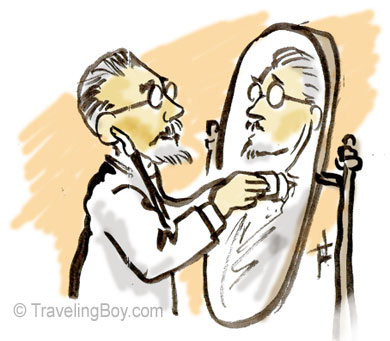
Self Care on the Journey
|
|
 raveling
locally or globally, many of us need reminders of how to care
for ourselves. I have observed in my work that many people do
not take the time to nurture themselves, that is to care for themselves
in a meaningful way. Increased anxiety is associated with the
stressors of a fast-paced life, technology that can invade privacy
and the rigors of living in overcrowded cities. Communications
technology in particular keeps us in a virtual office twenty four
hours a day, wherever we are. Today's lifestyle envelops us and
depletes our energy. raveling
locally or globally, many of us need reminders of how to care
for ourselves. I have observed in my work that many people do
not take the time to nurture themselves, that is to care for themselves
in a meaningful way. Increased anxiety is associated with the
stressors of a fast-paced life, technology that can invade privacy
and the rigors of living in overcrowded cities. Communications
technology in particular keeps us in a virtual office twenty four
hours a day, wherever we are. Today's lifestyle envelops us and
depletes our energy.
Many of us need to take an inventory of how we are doing, and
how we are tending to ourselves. What are our resources for optimal
well being? Eating nutritionally, getting sufficient sleep and
good hygiene are essential. Knowing your body and its requirements
for sustenance are key factors. Individuals differ when it comes
to what their bodies require in terms of food and sleep. If in
doubt regarding food, the advice of a registered nutritionist
can be invaluable for the proper nutrients and foods for you.
Some respond best to high protein foods, some respond best to
vegetables, grains, and fruits. The right amount of sleep differs
from one person to the next, but adequate rest is a major factor
in well being.
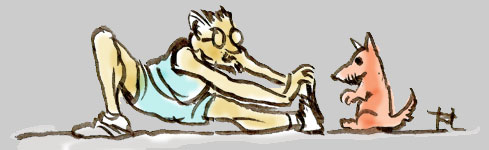
Exercise is invaluable for regulating blood pressure, increasing
endorphins, maximizing good chemistry and energy. Physical activity
can also decrease melancholy, anxiety and depressive symptoms.
Attention to physical hygiene also contributes to well being.
Keeping your body, clothes, and surroundings clean is important
for balance, good health and empowerment.
Mental hygiene includes the things we remember to do for ourselves.
Taking time out to renew and revivify is very important. Something
as simple as sitting quietly and focusing on breathing in and
out can invite inner calmness and serenity. Many call this meditation.
A main objective of meditation is to be "in the moment"
not thinking about the past or the future, be here now. As little
as five minutes of meditation can decrease blood pressure and
anxiety. There are many other therapeutic interventions for self
care and centering, such as positive self talk, affirmations,
art, music, slogans, humor, soaking in a hot bath, a steam bath,
sauna, nature, touch, massage, allowing oneself the permission
to be in touch with our feelings and spirituality contribute to
harmony.
Playing and having fun--the language of children--is also part
of caring for ourselves. Attention to self empowers one to invest
in peace of mind and a loving heart. The important thing is to
take or make the time to care for ourselves at home or on our
travels.
|


Dr. Joel,
I found your Self Care on the Journey article
to be most illuminating. I am single, and someone who lives to
travel. But whenever I get off the plane to an international destination,
check in to my hotel, unpack and then get a chance to sit down…
I feel mundane, depressed and disoriented. I didn't state this
very well, but it is much more than jet jag. It's gotten to the
point where I worry months in advance before a trip, and now am
even tapering my travels back. I have never heard your term, "mental
hygiene" before, but it seems to make sense. Rather than
just sit on my bed and fight sleep, I am going to try focus on
self-awareness as you suggested. I think your term, positive self
talk --- which I have never heard of either --- is worth a shot.
I loved the positive tone of your article and agree that 'playing
and having fun' is something that we all need to concentrate on.
Please keep up the great work!
Brian Hogan
Hi Brian,
Thank you for your
response to the article I wrote for Travelling Boy. Com, Self
Care on the Journey. The symptoms you are experiencing could be
attributed to several variables. One thing that comes to mind
is unresolved issues. Something you are concerned about or have
not addressed before going on the trip. At times when one travels
the expectation, planning, and the excitement of going away may
divert our attention away from something that needs to be worked
through. Hence, we take it with us on the journey.
Another thought could be that you have sensitized yourself to
expect to get negative symptoms when you arrive at a destination.
You say you get depressed, disoriented and feel mundane when you
get to your room, unpack and sit down. You could also be experiencing
a sort of hyper jet lag. When we get fatigued after a big trip
the arrival could be a let down too. With all the planning, packing,
getting to destination etc, we expend much energy. The draining
feelings you are having could recall a former experience that
might be connected to the symptoms. Also at times we all experience
what I would call a mood that feels like an existential vacuum.
Take an inventory of what
you think it might be connected to. That could help you get to
the root problem. Change your pattern of how you do things; be
in touch with your feelings. Utilize interventions like breathing
exercises (yoga techniques), thought stopping/blocking (this is
done by clearing your mind or redirecting thoughts and actions)
so you do not perseverate on the negative thoughts. Take care
of yourself by being good to yourself. Instead of sitting on the
bed soak in a hot tub, listen to music; make a plan to have some
fun. Change thoughts, change behaviors and you will again optimize
your enjoyment of travel. So once again you can continue to be
someone who lives to travel.
Bon voyage and best regards.
Joel
|
|

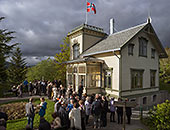
Three Musical Pilgrimages: Mozart, Grieg and Hendrix
Johann Chrysostom Wolfgang Amadeus Mozart (1756 - 1791)
could read and compose music, plus play the violin and piano, when he was
five years old. Born into a musical family in Salzburg, Austria (then the
Holy Roman Empire), he had a unique ability for imitating music, which first
became evident when he recited a musical piece by simply observing his father
conducting a lesson to his older sister. This led to a childhood on the
road, where the young prodigy performed before many of the royal courts
of Europe.

|
|
|

Treasures of Ireland: The Irish Goodbye (Dispatch
#20)
The Palladian Traveler brings to a close his 20-part
series on the Emerald Isle from an upscale restaurant in downtown Dublin
where he files his final dispatch and then quietly slips away.
|
|
|

Two "MUST SEE" Truly Spectacular Places
in Europe. Here's Why.
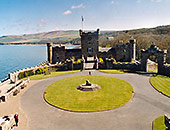
The Han Grotto and Culzean Castle. As the name
of my Traveling Boy feature is "Travel With a Difference," it's
important to me to always bring you offbeat and unusual tourist places around
the world you may not know about. These two fit that category to a T, and
they're absolutely worth a visit. One's in Scotland and one's in Belgium.
Culzean (pronounced CULLANE) Castle is located near Maybole, Carrick, on
the Ayrshire coast of Scotland.
|
|
|

Highway 49 Revisited: Exploring California's
Gold Country
In the 1840s, the population of California was only
14,000, but by 1850 more than 100,000 settlers and adventurers had arrived
from all over the world – and they came for one reason: gold. James
Marshall had discovered the first gold nugget at Sutter’s Mill in El
Dorado County, creating the largest gold rush in history.
|
|
|

Lake Charles’ Family-Size Low-Key Mardi Gras
The Southwest Louisiana Mardi Gras in Lake Charles,
the second largest in Louisiana, does not need parents there to avert their
children’s eyes. This is family entertainment and children are very
much part of it. The main office of the Lake Charles CVB has costumes from
last year’s Mardi Gras but it also has figures to fascinate little
ones from country boys fishing for their dinner to alligators who have already
fed and are rubbing their stomachs.
|
|
|

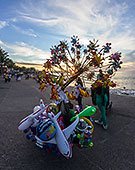
Puerto Vallarta: Magic and Mayhem on the Malecon
So I heard that you could spend from dawn to dusk on
the Malecon in Puerto Vallarta, Mexico and never get bored and I thought,
"Okay, I'm up for that challenge." Well, maybe not the dawn part
– I'm not a morning person – so I had no problem leaving those
early hours to the joggers and those seeking an early start to catch their
red snapper for dinner.
|
| |
|
© TravelingBoy.com.
All Rights Reserved. 2015.
This site is designed and maintained by WYNK
Marketing. Send all technical issues to: support@wynkmarketing.com
|






|